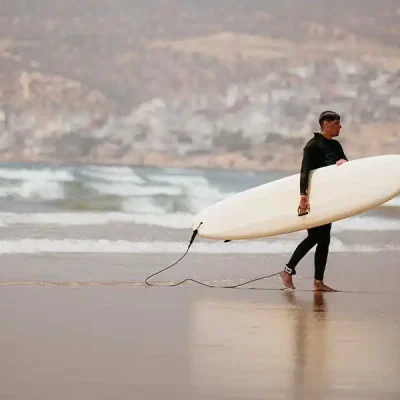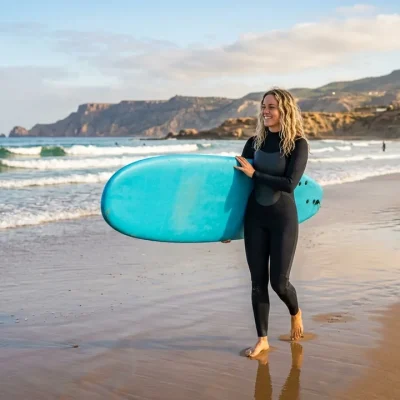

One of the most frequent packing questions from travelers planning a surf holiday in Tamraght and Taghazout is: “What wetsuit thickness do I actually need?”
Because Morocco is located in North Africa and boasts over 300 days of sunshine a year, many travelers expect tropical water temperatures. In reality, the Atlantic ocean along the Agadir coastline is fed by the Canary Current and cold deep-sea upwelling, meaning the water remains refreshingly cool year-round.
As a rule of thumb: pack a 4/3mm wetsuit from November through April (water 16°C–18°C), and a 3/2mm fullsuit or springsuit from May through October (water 19°C–22°C). Below is the comprehensive month-by-month guide covering seam sealing, neoprene booties, hoods, and rental options.
Morocco Water Temperature & Wetsuit Guide by Month
| Month | Water Temp (°C / °F) | Air Temp (High / Low) | Recommended Suit | Booties / Hood? |
|---|---|---|---|---|
| January | 16°C–17°C (61°F–63°F) | 21°C / 10°C (70°F / 50°F) | 4/3mm Fullsuit | Optional 2mm booties |
| February | 16°C–17°C (61°F–63°F) | 22°C / 11°C (72°F / 52°F) | 4/3mm Fullsuit | Optional 2mm booties |
| March | 16°C–18°C (61°F–64°F) | 23°C / 13°C (73°F / 55°F) | 4/3mm (or 3/2mm afternoon) | Not required for sand |
| April | 17°C–18°C (63°F–64°F) | 25°C / 14°C (77°F / 57°F) | 3/2mm Fullsuit | None needed |
| May | 18°C–19°C (64°F–66°F) | 26°C / 16°C (79°F / 61°F) | 3/2mm Fullsuit | None needed |
| June | 19°C–21°C (66°F–70°F) | 28°C / 18°C (82°F / 64°F) | 3/2mm or Springsuit | None needed |
| July | 20°C–22°C (68°F–72°F) | 29°C / 19°C (84°F / 66°F) | 2mm Shorty or Boardies | None needed |
| August | 21°C–22°C (70°F–72°F) | 30°C / 20°C (86°F / 68°F) | 2mm Shorty or 3/2mm | None needed |
| September | 20°C–21°C (68°F–70°F) | 28°C / 18°C (82°F / 64°F) | 3/2mm Fullsuit | None needed |
| October | 19°C–20°C (66°F–68°F) | 27°C / 16°C (81°F / 61°F) | 3/2mm Fullsuit | None needed |
| November | 18°C–19°C (64°F–66°F) | 24°C / 13°C (75°F / 55°F) | 4/3mm (or warm 3/2mm) | Optional for rocks |
| December | 16°C–17°C (61°F–63°F) | 21°C / 10°C (70°F / 50°F) | 4/3mm Fullsuit | Optional 2mm booties |
Expert Neoprene Advice: Water temperature is only half the battle. In Morocco, early morning “dawn patrol” sessions frequently feature crisp offshore breezes blowing off the Atlas Mountains. A 4/3mm suit with Glued and Blindstitched (GBS) seams blocks wind chill, keeping you out in the water for 3+ hours while surfers in leaky suits are shivering back on the beach.
Winter Surfing (November to March): Why 4/3mm is King
Winter is Morocco’s premier surf season. Massive low-pressure systems over the North Atlantic send world-class groundswells marching towards Anchor Point, Boilers, and Devil’s Rock. While daytime sunshine frequently pushes air temperatures to a balmy 22°C–24°C, Atlantic water temperatures hover between 16°C and 17°C (61°F–63°F).
A high-quality 4/3mm wetsuit provides the thermal barrier needed for long coaching sessions. Look for chest-zip entries rather than back-zips to minimize flushing when taking whitewater sets on the head.

Shoulder & Summer Seasons (April to October)
By late spring, the Atlantic begins to warm steadily. May through October brings water temperatures between 19°C and 22°C (66°F–72°F). During this window, a standard 3/2mm fullsuit provides the ultimate blend of unrestricted paddle mobility and comfortable core insulation.
In July and August, when air temperatures push past 30°C in Agadir, shorty springsuits or even 1mm neoprene tops paired with boardshorts or surf leggings are popular for midday sessions at Anza and Crocs.
Do You Need Neoprene Booties, Hoods, or Gloves?
Reef Booties: Point Breaks vs. Beach Breaks
Whether you need reef booties depends almost entirely on the spots you surf:
- Sandy Beach Breaks (Devil’s Rock, Crocs, Anza): 100% fine sand bottom. Booties are completely unnecessary and reduce your board feel.
- Point Breaks (Anchor Point, Killer Point, Banana Point): Low-tide entries require walking across sharp barnacles, volcanic rock shelves, and scattered black sea urchins. A lightweight pair of 2mm split-toe reef booties provides great peace of mind.

Hoods & Gloves: Definitely Leave Them at Home
Moroccan waters never drop into the frigid sub-14°C zones found in northern Europe or California. You will never need a neoprene hood or surf gloves in Tamraght or Taghazout. Freeing up your neck and hands allows for natural paddling and temperature regulation under the Moroccan sun.
Bringing Your Own Wetsuit vs. Renting Locally
If you own a fitted, high-quality 4/3mm or 3/2mm suit, bringing it in your carry-on or board bag ensures familiar comfort. However, traveling with wet neoprene on return flights can add heavy baggage weight.
If you prefer traveling light, Morocco Surf & Stay provides sanitized, high-grade Rip Curl, O’Neill, and Alder wetsuits across all adult and child sizes as a standard inclusion in our 7-day surf camps. Our quiver is inspected and replaced regularly, ensuring you never receive a stiff, hole-ridden rental suit.
Frequently Asked Questions About Moroccan Surfing Wetsuits
1. Is a 3/2mm warm enough for December and January in Morocco?
For a quick 1-hour session on a warm sunny afternoon, yes. But for morning sessions with offshore wind or 2-to-3-hour surf lessons, you will get cold. A 4/3mm suit is universally recommended for winter months.
2. What happens if I visit Imsouane (Magic Bay)?
Imsouane sits 90 minutes north of Tamraght and is often 1°C cooler due to open northern Atlantic exposure. A 4/3mm is strongly recommended at Imsouane from October through May, especially given the famously long 800-meter leg-burning rides.
3. How do I dry my wetsuit between sessions in Tamraght?
Always rinse your suit in fresh water after surfing, turn it inside out, and hang it folded over a wide bar in shaded ventilation. Avoid hanging wetsuits in direct Moroccan midday sun, as intense UV rays degrade neoprene elasticity and dry out taped seams.
4. Can female surfers wear swimsuits or surf leggings?
In July and August, water temperatures reach 22°C and many surfers wear UV rash guards and surf leggings or springsuits. In public villages, local cultural modesty is respected by throwing a kaftan or linen shirt over swimwear when walking between the beach and cafes.
Never Freeze in the Moroccan Lineup: Tailored Wetsuits & Quiver Included
Leave your heavy, bulky neoprene at home. Every Morocco Surf & Stay package provides high-performance, pristine 3/2mm and 4/3mm wetsuits matched to your sizing and current water temperature, plus custom boards, expert coaching, and private airport transfers.
Step-by-step coaching, warm wetsuits, soft-top boards, and safety essentials at Devil’s Rock & Banana Beach.
Daily spot guiding to Anchor Point, Killer Point & Panoramas with video review and wave positioning tips.
Combine energizing morning surf sessions with restorative sunset rooftop yoga overlooking the Atlantic.
Warm Suits, Perfect Waves & Ocean Views
Experience Morocco’s world-class surf without the logistical headache. At Morocco Surf & Stay, our all-inclusive surf camp packages include daily coaching, tailored wetsuits, board rental, oceanfront accommodation in Tamraght, delicious home-cooked meals, and airport transfers.