
The notification chime on your desk is relentless. Your calendar is a Tetris board of “urgent” meetings, and your eyes ache from the perpetual blue light of a twelve-hour workday. We live in an era of hyper-connectivity, yet most of us have never felt more disconnected from our own bodies.
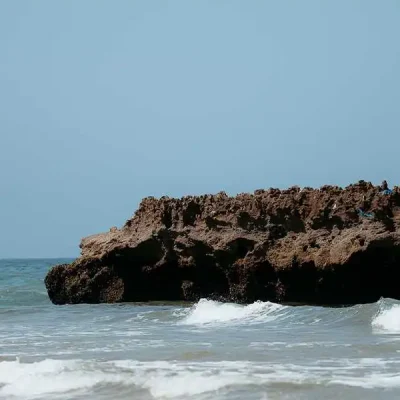
Now, imagine a different rhythm. Instead of an alarm clock, you wake to the rhythmic pulse of the Atlantic crashing against sandstone cliffs. Instead of the smell of stale office coffee, the air carries the scent of wild thyme, roasting coffee beans, and the salty mist of the ocean.
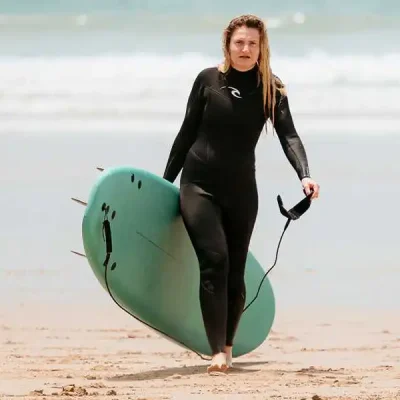
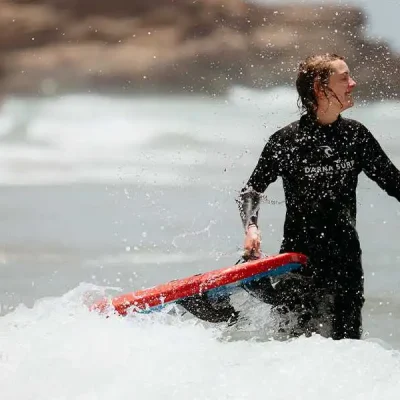
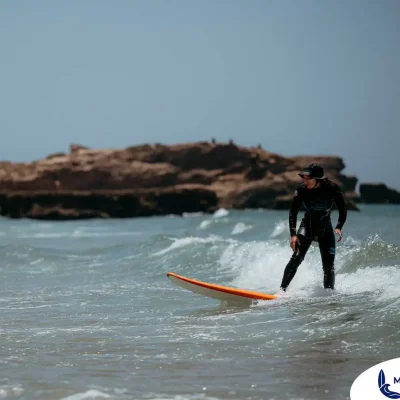
This isn’t just a dream; it’s a typical morning on a Morocco surf and yoga retreat. In the rugged coastal villages of the Maghreb, a movement is growing. It’s called “Salt & Zen,” and for the burned-out professional, it is the ultimate biological reset. By combining the explosive energy of surfing with the grounding stillness of yoga, Morocco offers a dual-pathway detox that heals the mind while challenging the body.
Why Yoga Makes You a Better Surfer?
At first glance, yoga and surfing seem like opposites—one is practiced in silence on a stable mat, the other in the chaotic, shifting energy of the ocean. However, they are two sides of the same coin. In Morocco, most retreats schedule “Sunrise Vinyasa” before hitting the waves and “Sunset Yin” to recover.
Balance and Core Stability:
The “pop-up”—the explosive move from lying on your board to standing—requires intense core engagement and fast-twitch muscle fibers. Yoga poses like Chaturanga and Navasana (Boat Pose) build the foundational strength needed to transition from the water to the board with grace rather than a wobble.
Flexibility and Injury Prevention:
Surfing is demanding on the shoulders and lower back. Constant paddling can lead to tightness and “surfer’s neck.” A targeted yoga practice focuses on opening the chest and lengthening the spine. By increasing your range of motion, you’re not just more agile on the waves; you’re protecting your joints from the repetitive strain of a long day in the lineup.
The Power of the Breath (Pranayama):
Perhaps the most vital crossover is Pranayama, or breath control. When a large set of waves rolls in at Taghazout surfing spots like Anchor Point, it’s easy for a beginner (or even an intermediate) to panic. Yoga teaches you to find stillness in discomfort. Learning to breathe deeply through your nose keeps your heart rate low and your mind clear, whether you’re holding a difficult pose or tumbling in a “washing machine” wipeout.
Trading Blue Light for Golden Hour:
The true luxury of a Moroccan getaway isn’t found in five-star hotels; it’s found in the “dead zones.” Many of the best surf camps are tucked into the hillsides of Tamraght or perched on the cliffs of Imsouane, where the Wi-Fi is intentionally spotty and the views are intentionally distracting.
A digital detox in Morocco is a forced surrender. When you are out in the lineup, sitting on your board and watching the horizon for the next set, there are no pings. There are no emails. There is only the temperature of the water, the taste of the salt on your lips, and the vast, golden North African sun.
This “nature therapy” is scientifically proven to lower cortisol levels. By trading the artificial glow of a smartphone for the “Golden Hour” light that bathes the Moroccan coast in hues of ochre and violet, you allow your circadian rhythms to recalibrate. You’ll find yourself falling asleep at 9:00 PM, exhausted in the best way possible, and waking up before the sun, feeling truly rested for the first time in years.
Moroccan "Soul Food":
A detox shouldn’t mean deprivation. In Morocco, nourishment is an art form. The local diet is naturally aligned with wellness travel goals: it’s whole, seasonal, and packed with anti-inflammatory properties.
The Post-Surf Feast:
Imagine returning from the beach to a steaming clay tajine. Slow-cooked lamb or chickpeas with apricots, ginger, and turmeric work to repair muscle tissue and reduce inflammation caused by a day in the Atlantic.
The Superfoods:
Fresh avocado shakes blended with local honey, bowls of omega-heavy walnuts, and the legendary Argan oil (which is eaten as well as applied to the skin) provide the healthy fats needed for sustained energy.
The Ritual:
No day is complete without “Berber Whiskey”—hot mint tea poured from a height to create a frothy head. It’s a ritual that forces you to slow down, sip, and savor the moment.
Cultural Immersion as Healing:
While the ocean provides the workout, the Moroccan culture provides the soul-work. There is a communal spirit in the surf villages that is infectious. You aren’t just a tourist; you are part of a “tribe” of like-minded travelers who have also traded their suits for wetsuits.
💡 Pro-Tip: The Moroccan Hammam
For the ultimate muscle recovery, skip the standard spa massage and head to a traditional Hammam. You’ll be ushered into a warm, steam-filled stone room where a practitioner uses savon noir (black eucalyptus soap) and a kessa glove to vigorously exfoliate your skin. It increases circulation, flushes out toxins, and leaves your muscles feeling like jelly. It is the single best way to ensure you aren’t too sore to surf the next morning.
When and Where to Go?
To get the most out of your wellness travel experience, timing and location are key. Morocco’s coastline offers something for every level of seeker.
The Best Time to Surf in Morocco:
Winter (November – March):
This is prime time for seasoned surfers. The North Atlantic swells are consistent and large. The weather remains pleasantly warm (18°C to 23°C), making it the perfect winter escape from Europe or North America.
Spring/Autumn:
Ideal for intermediates and those looking for smaller crowds.
Summer:
Great for absolute beginners. The waves are mellow, though it can get quite hot inland.
The Best Time to Surf in Morocco:
Taghazout:
The world-famous surf mecca. It’s vibrant, bustling, and filled with rooftop yoga studios overlooking the ocean.
Tamraght:
Just down the road from Taghazout, this village offers a “chill” alternative. It’s quieter, more residential, and perfect for those who want a deeper focus on meditation and silence.
Imsouane:
Home to “The Bay,” one of the longest waves in the world. It is a magical, secluded spot where time seems to stand still.
Conclusion: Coming Home "Lighter"
A surf and yoga retreat in Morocco isn’t just a holiday; it’s a nervous system reset. You arrive with “heavy” shoulders—weighted down by the expectations of your career and the clutter of digital life. You leave “lighter,” with sun-bleached hair, salt-kissed skin, and a mind that has finally learned how to be still.
Morocco teaches us that we don’t need to “do” more to be successful; sometimes, we just need to flow with the tide.
Frequently Asked Questions (FAQ):
1. Do I need to be good at yoga or surfing to join a retreat?
Absolutely not! Most retreats cater to “Level 0” beginners. The goal is the experience, not the performance.
2. Is it safe for solo female travelers?
Yes. Surf villages like Taghazout and Tamraght are very accustomed to international travelers and are known for their welcoming, community-focused atmosphere.
3. What should I pack for a Morocco surf and yoga retreat?
Bring a high-SPF reef-safe sunscreen, a reusable water bottle, comfortable yoga leggings, and a light jacket for the cool desert evenings. Most retreats provide boards and wetsuits.
4. Can I drink the water?
It is generally recommended to drink filtered or bottled water in Morocco to avoid stomach upsets during your detox.