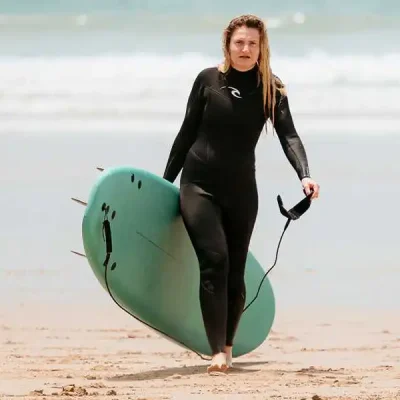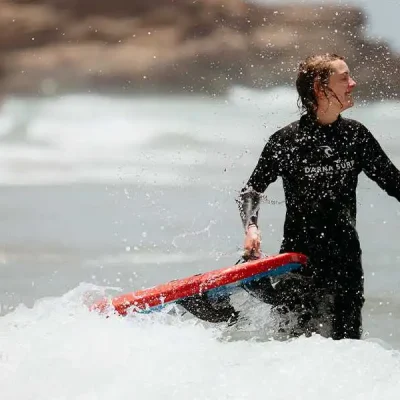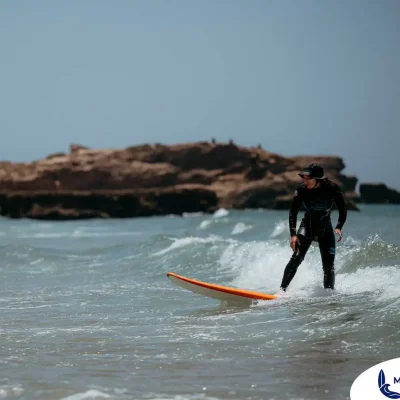
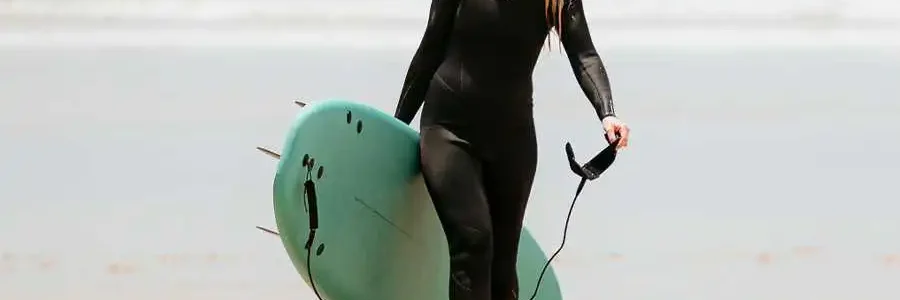
Agadir is the premier choice for solo female surfers in 2026 due to its unique blend of high-safety ratings, a booming female-only surf community, and world-class accessibility. With 300+ days of sunshine and consistent Atlantic swells at spots like Anza and Banana Beach, it offers a secure, supportive environment for women to progress from whitewater to green waves.
Why We Believe Agadir is the New Global Hub for Women’s Surf
At our camp, we’ve seen a massive shift this January. The lineup at Devil’s Rock is no longer just the “boys’ club” it used to be. Just last week, I shared a sunrise session with five other solo female travelers, all of whom met through local WhatsApp groups and surf meetups.
There is a specific energy in Agadir right now. It feels like a community rather than just a tourist destination. When you walk through the surf village of Anza or the updated promenades of Agadir, you aren’t just a guest; you’re part of the local “surf family.”
The 2026 Reality: Infrastructure and Safety
If you haven’t visited since 2024, you’ll barely recognize the transit. The Agadir-Taghazout road improvements are finally complete as of early 2026. The new orbital road has slashed travel times between the airport and the northern surf spots by nearly 30 minutes.
Current 2026 Costs & Logistics:
Airport Transfers:
Standard rates from Agadir Al-Massira are roughly 250-300 MAD (approx. $25-$30).
Daily Surf Hire:
A quality 3/2mm wetsuit and a hardboard or foamie will run you about 150 MAD per day.
Coffee with a View:
A “Nous-Nous” (traditional half-milk, half-coffee) at a beachside cafe remains a steal at 15-20 MAD.
The safety vibe in 2026 is at an all-time high. The local authorities have increased “tourist police” presence in surf zones, and the sheer volume of digital nomads means you are never truly “alone” unless you want to be.
Mastering the Waves: Best Spots for Solo Travelers
When you’re surfing solo, you want spots that are easy to paddle out to and have a friendly crowd.
Anza (The Consistent Queen):
This is our go-to in January 2026. The sandbars have settled perfectly this season, creating long, peeling rights that are ideal for intermediates.
Banana Beach:
Perfect for those still mastering surf etiquette. The waves here are “mellow,” giving you plenty of time to pop up without the pressure of a heavy reef break.
Imsouane (The Day Trip):
As of this week, the “Magic Bay” is still providing the longest rides in Africa. It’s a 90-minute drive from Agadir, but the camaraderie in the water is worth every kilometer.
Insider Tips for 2026: The "Expert Troubleshooting"
One thing the big booking sites won’t tell you is how to handle the “January Chill.” While the sun is hot, the Atlantic is crisp. Pro Tip: Bring a hooded thermal rash vest to wear under your 3/2mm.
The Digital Nomad Secret:
If you need to get some work done between sessions, skip the crowded Taghazout cafes. Head to Let’s Be in Tamraght or the newer Ocean Hub in Anza. They have the most stable fiber-optic Wi-Fi we’ve found this year, and the avocado toast is legendary.
How to Avoid "The Bay" Crowds?
Agadir’s main bay can get “clogged” with jet skis and beginners during the afternoon. We always advise our guests to surf the “Golden Hour” (7:00 AM). You’ll get the glassy offshore winds and have the peak almost entirely to yourself before the surf schools arrive at 10:00 AM.
More Than Just a Surf Trip:
Surfing as a woman in Morocco involves understanding the culture. At Morocco Surf & Stay, we prioritize teaching local customs alongside the duck dive.
Respect the Peak: Always look left and right before taking off.
Dress Code: While bikinis are fine on the surf beaches, we recommend throwing on a linen shirt or kaftan when walking through the village or visiting the Souk El Had.
Support Local: We encourage our guests to buy their Argan oil from the women’s cooperatives in the hills—it’s more authentic and supports the local female economy directly.
Start Your Journey with Morocco Surf & Stay
Ready to join the tribe? Whether you’re looking for a Women’s Only Surf Week or a Guided Surf Adventure, we have the local knowledge to make your solo trip safe and unforgettable.
Would you like me to create a custom 7-day itinerary for your solo trip to Agadir?
Frequently Asked Questions from our 2026 Guests
1. Is it safe to drive to Imsouane with the 2026 road changes?
Yes, driving to Imsouane is now safer and faster than ever thanks to the completed orbital road and viaduct projects. The new route bypasses the precarious coastal cliff turns that used to make solo travelers nervous. You can now rent a car in Agadir and enjoy a smooth, 1.5-hour drive on well-paved roads. We still recommend driving during daylight hours to avoid stray livestock on the road, but the “danger” factor has significantly decreased with the 2026 upgrades.
2. Why do we recommend a 4/3mm over a 3/2mm for dawn sessions in February?
A 4/3mm provides the essential thermal protection needed for the 16-17°C (61-63°F) water temperatures during the peak of winter. While the Moroccan air can reach a balmy 22°C (72°F) by noon, the Atlantic stays cold. A 4/3mm wetsuit ensures you can stay in the water for a two-hour session without the “shiver factor.” If you only bring a 3/2mm, you’ll likely find yourself cutting dawn sessions short just as the offshore winds are at their best.
3. How does the new Taghazout Bay development affect the line-up at Panoramas?
The development has increased the number of beginner surfers, making Panoramas more crowded but also more regulated. The “Eco-Resort” vibe of Taghazout Bay has attracted more international surf schools. This means the lineup at Panoramas—a classic sandbar break—is busier between 10:00 AM and 2:00 PM. To avoid the crowd, we suggest paddling out at first light or choosing the northern end of the beach where the commercial schools rarely venture.
4. What happens to the Moroccan swell window if the North Atlantic Oscillation (NAO) shifts?
A negative NAO phase typically results in more frequent and powerful swells hitting the Agadir coast. In 2026, we’ve noticed that when the NAO shifts, the “Swell Machine” of the Atlantic turns on, sending consistent 6ft to 10ft groundswells. This is great for advanced surfers but can make beach breaks like Anza quite heavy. During these shifts, solo intermediate women should look for sheltered “point breaks” like Banana Point, which filter the size into more manageable, long-period lines.
5. How to navigate local surf etiquette at competitive spots like Anchor Point?
The key to Anchor Point is “The Wait and See” approach—spend 15 minutes watching the rotation before paddling in. Anchor Point is Morocco’s crown jewel and can be competitive. As a solo woman, the best way to gain respect is by showing you understand the priority peak. Don’t “snake” the inside. If you wait your turn and demonstrate a strong paddle, the local rippers will often hoot you into a wave. A polite “Salam” goes a long way in breaking the ice in the lineup.