
Souk El Had Opening Times & Hours
- 📅 Opening Days: Tuesday to Sunday
- ⏰ Opening Hours: 9:00 AM – 6:00 PM
- 🚫 Closed: Every Monday (for cleaning and maintenance)
- 💡 Best Time to Visit: Weekday mornings (10:00 AM – 12:00 PM) to avoid crowds
Welcome to Souk El Had, the bustling heart of Agadir and one of the largest urban markets in all of Morocco and North Africa. This isn’t just a place to shop; it’s a vibrant, living institution—a sensory labyrinth where the traditions of Moroccan commerce and culture come alive.
For anyone visiting Agadir, a trip to Souk El Had is an absolute must-do, offering a window into the authentic daily life of the city.
A City Within a City:
Souk El Had is more than a market; it’s a sprawling, walled metropolis of commerce, covering a massive area of approximately 13 hectares and housing over 6,000 shops and stalls. The name “El Had” means “Sunday” in Arabic, a nod to its historical function as a great Sunday fair where merchants from the Souss region and beyond would converge. While it’s now open every day except Monday, the name remains a testament to its long-standing importance.
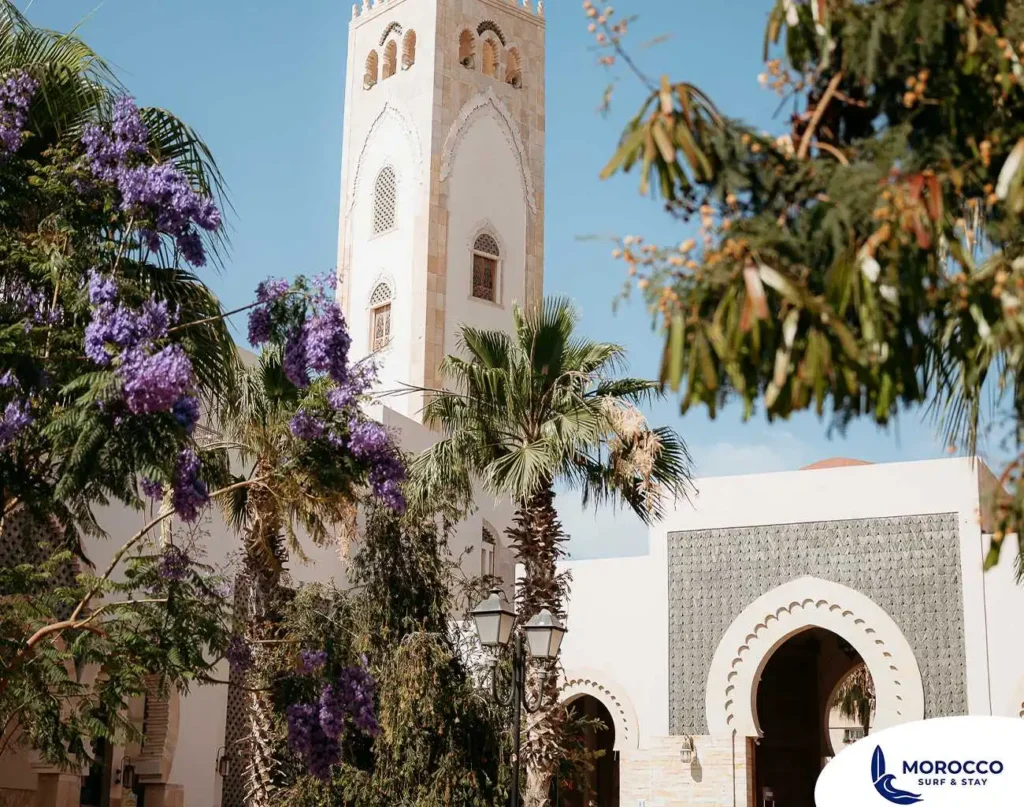
The souk’s impressive ramparts, inspired by the city’s ancient Kasbah, hint at the treasures and organized chaos that lie within. Rebuilt and modernized after the devastating earthquake of 1960, the souk today is a symbol of Agadir‘s resilience, blending traditional Berber-inspired architecture with modern, well-structured pathways.
A Labyrinth of Senses:
Stepping through one of the souk’s 13 immense gates (or “babs”) is to be immediately immersed in an experience that engages every sense.
Sights:
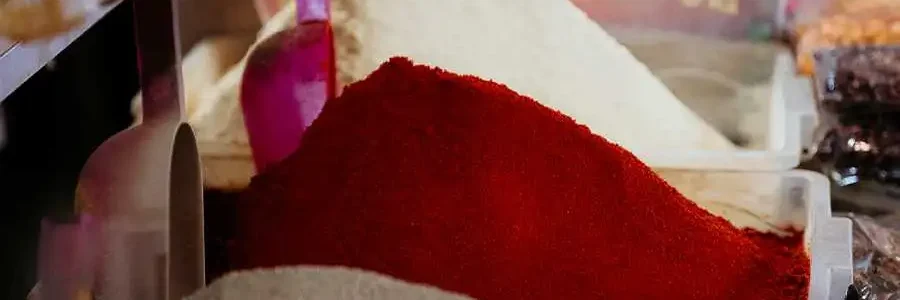
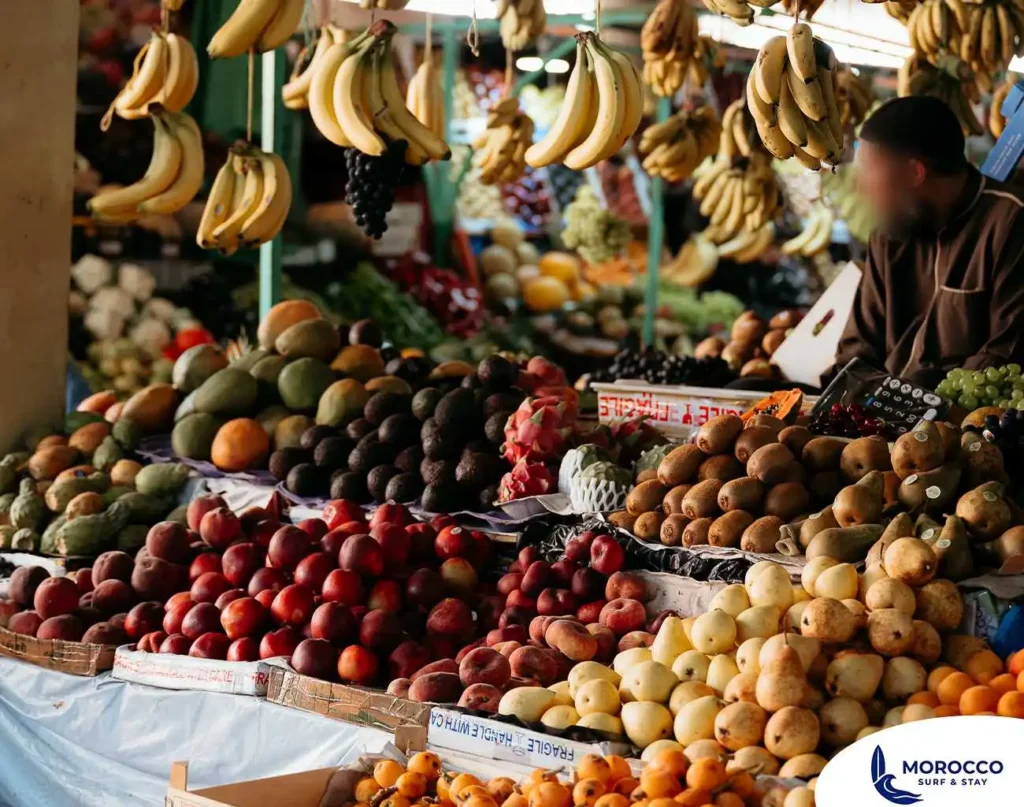
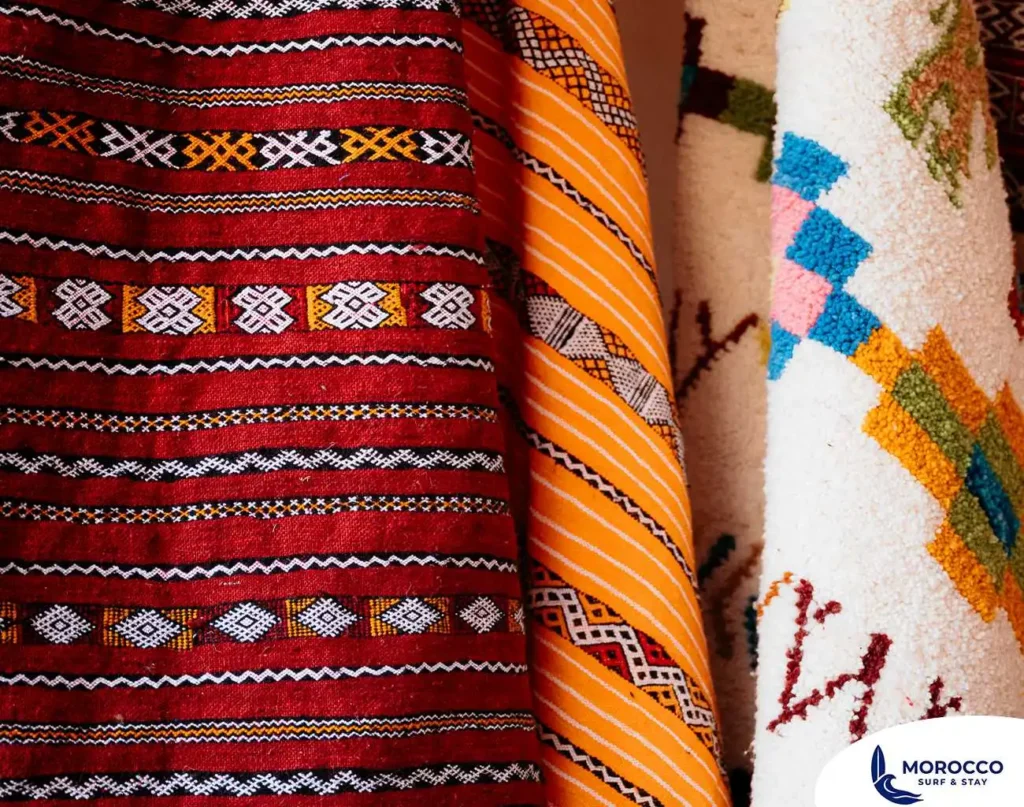
The market is a kaleidoscope of colors. Mountains of vibrant spices, intricately woven carpets, and a rainbow of fruits and vegetables are all on display. You’ll see artisans at work, crafting leather goods, pottery, and silver jewelry.
Sounds:
The air is filled with a lively symphony of sounds—the friendly banter of merchants, the chatter of customers, and the occasional call to prayer echoing from a nearby mosque. It’s an energetic hum that defines the atmosphere.
Smells:
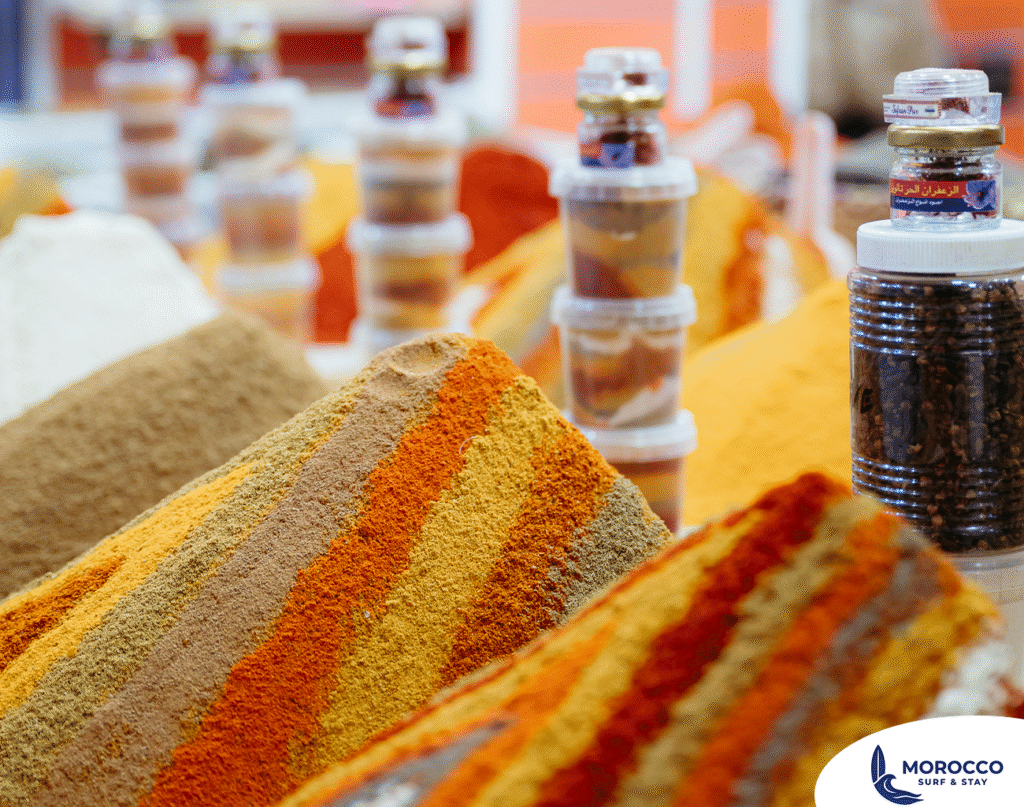
The aromas are intoxicating. The sweet scent of dates and fresh mint tea mingles with the rich, earthy fragrance of spices like saffron, cumin, and Ras El Hanout. The scent of tanned leather and argan oil perfumes the air in the artisan sections.
Explore the Coastline and Beaches:
Beyond the surf spots, the coastline offers plenty of secluded bays and stretches of sand perfect for a quiet day of sunbathing or a long walk. Imourane Beach and the promenade are great for a leisurely stroll.
Tastes:
You can’t leave without tasting the local flavors. Stop at a small food stall for a glass of freshly squeezed orange juice, a warm “m’semen” (a Moroccan flatbread), or a delicious tagine or couscous dish.
What to Buy: Navigating the Souk's Sections
Souk El Had is well-organized, with each type of product typically found in a specific section. This helps both locals and tourists navigate the vast space.
Artisanat (Handicrafts):
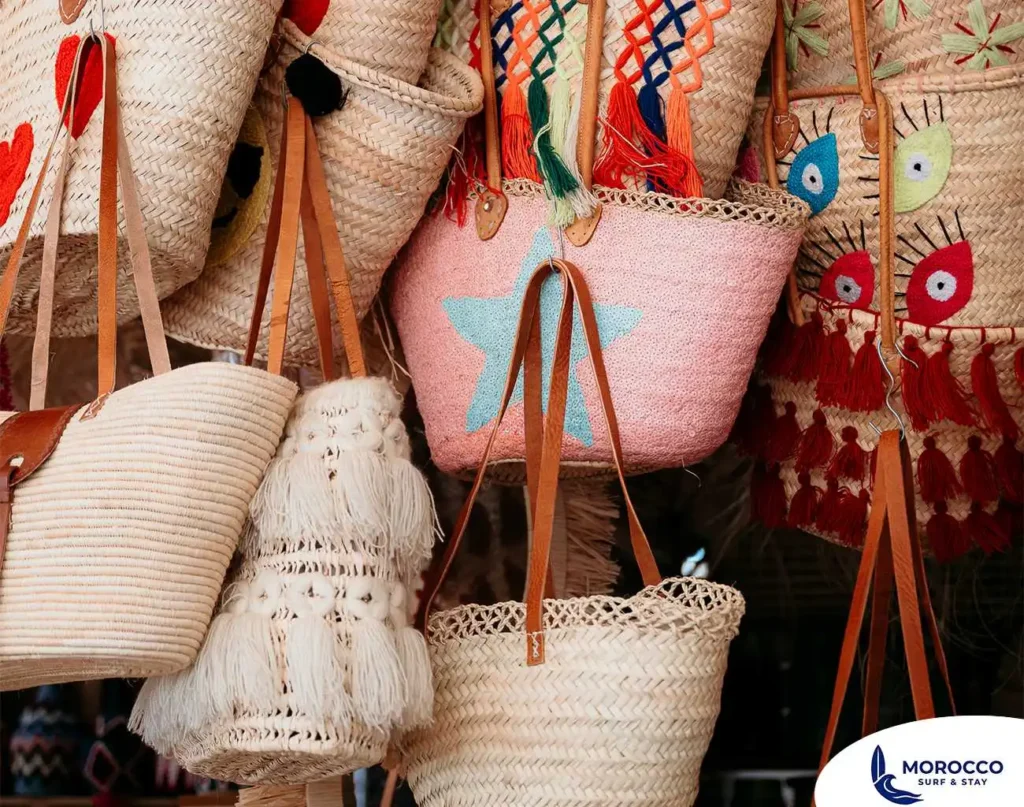
Here you’ll find authentic Moroccan crafts. Look for beautiful hand-knotted carpets, traditional leather babouches (slippers), intricately carved wooden boxes, and handmade silver and Berber jewelry. Be prepared to haggle—it’s part of the experience.
Spices and Food:
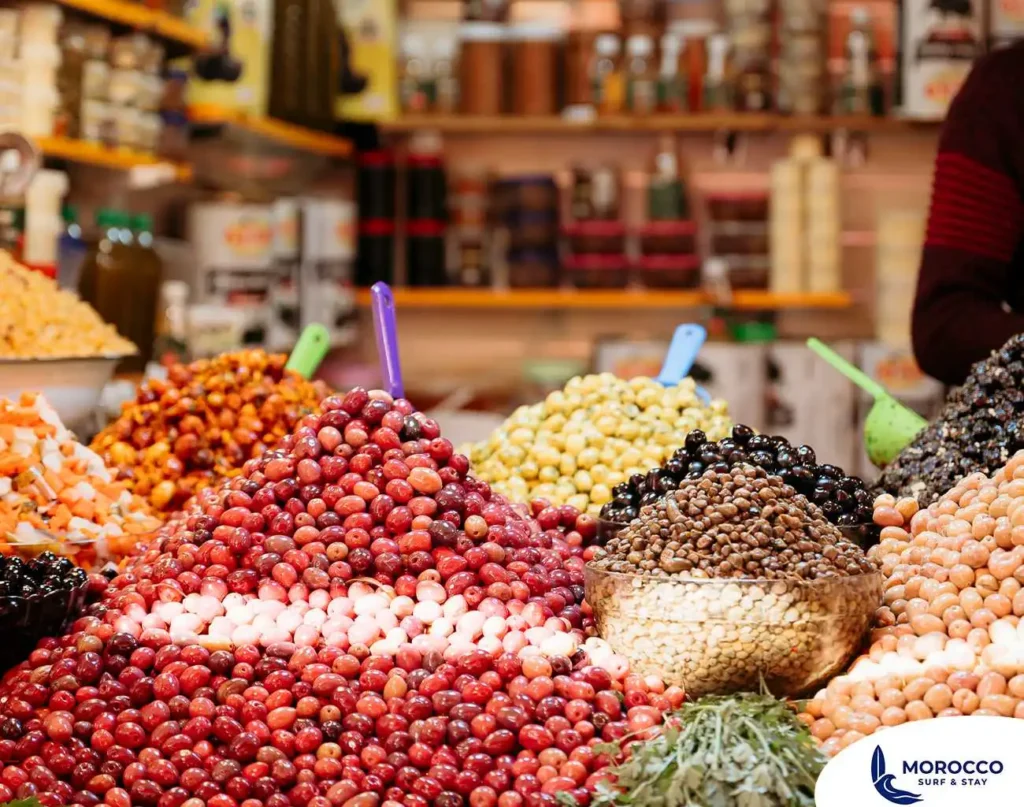
This is where the souk’s culinary heart lies. The spice section is a photographer’s dream, with hundreds of different spices piled high. You can also buy fresh produce, olives, nuts, and sweets.
Clothing and Textiles:
he aromas are intoxicating. The sweet scent of dates and fresh mint tea mingles with the rich, earthy fragrance of spices like saffron, cumin, and Ras El Hanout. The scent of tanned leather and argan oil perfumes the air in the artisan sections.
Explore the Coastline and Beaches:
From traditional djellabas and caftans to modern clothing and fabrics, this section offers a wide variety of textiles.
Furniture and Home Goods:
The souk even has sections dedicated to home furnishings, from intricate metalwork lanterns to hand-painted ceramics and furniture.
Practical Tips for Your Visit:
Opening Hours:
The souk is open from Tuesday to Sunday, typically from 9:00 AM to 6:00 PM. It is closed on Mondays for cleaning. The best time to visit is in the morning on a weekday to avoid the biggest crowds.
Getting There:
The souk is centrally located and easily accessible. A petit taxi is the most convenient and affordable way to get there from anywhere in Agadir. Just tell the driver “Souk El Had.”
Haggling:
Haggling is a customary practice. Start with a price significantly lower than the vendor’s initial offer and work your way up. Keep it friendly and light-hearted—it’s a fun negotiation, not a fight.
Cash is King:
Most vendors only accept cash (Moroccan Dirhams). It’s a good idea to have small bills on hand. There are ATMs available near some of the main gates.
Respect Local Customs:
While the souk is a tourist-friendly area, it’s still a traditional Moroccan space. Dress respectfully by covering your shoulders and knees. Always ask for permission before taking a photo of a person.
Beware of Scams:
Be mindful of your belongings in crowded areas. Also, be aware that some products, particularly in tourist-heavy areas, may not be authentic. Look for artisans who are actively working on their craft to ensure you’re getting a genuine product.
A Symbol of Resilience and Community
More than just a commercial hub, Souk El Had is a testament to the enduring spirit of Agadir. It’s a place where generations of families have run their businesses, and where the community gathers for their daily needs and social interactions.
A visit here is not just a shopping trip; it’s a chance to connect with the local culture, witness the vibrant rhythm of Moroccan life, and take home not just a souvenir, but a genuine experience.
Frequently Asked Questions (FAQ):
1. What are Souk El Had Agadir's opening times and hours?
Souk El Had is open Tuesday through Sunday from 9:00 AM to 6:00 PM. The market is closed every Monday for cleaning. The best time to visit is weekday mornings between 9-11 AM to avoid weekend crowds.
2. Is Souk El Had open on Monday?
No, Souk El Had Agadir is closed every Monday for cleaning and reorganization. The market reopens Tuesday morning at 9:00 AM and operates through Sunday.
3. What time does Souk El Had open?
Souk El Had opens at 9:00 AM from Tuesday to Sunday. The market is closed all day Monday. Arriving early, around 9:00-9:30 AM, gives you the best selection and a more relaxed shopping experience before the crowds arrive.
4. When is Souk El Had closed?
Souk El Had is closed every Monday for cleaning. Additionally, the market may close on major Islamic holidays. The souk operates Tuesday through Sunday from 9:00 AM to 6:00 PM during regular weeks.
5. What are the primary payment methods, and is it necessary to carry cash?
While some of the larger, more established shops near the main gates might accept credit cards, for the vast majority of transactions within Souk El Had, cash (Moroccan Dirhams) is king. Most smaller vendors and food stalls rely entirely on cash payments, and having small bills readily available will make the purchasing and haggling processes much smoother and easier. It is a good practice to withdraw enough local currency from an ATM, which are typically located just outside or near the main entrances, before entering the main market area for your shopping trip.
6. What are the best days and times to visit Souk El Had to avoid the largest crowds?
The best time to visit Souk El Had is generally on a weekday morning, shortly after it opens around 9:00 AM. Visiting earlier in the day and mid-week allows you to experience the market’s vibrant atmosphere without the massive crowds that typically gather on weekends (Friday to Sunday) and later in the afternoon. Since the souk is closed all day on Monday for cleaning and reorganization, Tuesday through Thursday mornings offer a balance of active commerce and easier navigation through the sprawling grounds and specialized sections.
7. Is haggling required, and what is the best way to approach it at the Souk?
Yes, haggling is a customary and expected practice when purchasing goods, especially handicrafts, carpets, and jewelry, as it is an integral part of Moroccan market culture. The best approach is to start with a price significantly lower than the vendor’s initial offer, often suggesting around 50% of the starting price, and then working your way up to a final amount that is satisfactory to both parties. It is crucial to keep the negotiation friendly, light-hearted, and respectful, as it is viewed as a playful social interaction rather than a confrontational event. Remember that for simple food items or pre-packaged goods in some areas, the price may be fixed.
8. What are the most popular and authentic local items recommended for tourists to buy?
Tourists should prioritize the specialized sections for authentic Moroccan crafts and culinary items to find the best souvenirs and goods. Highly recommended purchases include genuine, hand-knotted Berber carpets, traditional leather babouches (slippers), and intricate silver or Berber-style jewelry found in the Artisanat section. For food, the souk’s vibrant spice section is a must-visit for high-quality saffron, local cumin, and the complex Ras El Hanout blend, alongside local Argan oil and fresh dates, ensuring you take a piece of Morocco’s culinary heritage home with you.
9. How big is Souk El Had, and how can a visitor effectively navigate the different sections?
Souk El Had is an immense market, sprawling over approximately 13 hectares and housing more than 6,000 shops and stalls, making it one of the largest urban markets in North Africa. Despite its size, the souk is relatively well-structured and organized into specialized sections, which is the key to effective navigation. Visitors should look for the large, numbered gates (babs) and use the sectioning to guide them—for instance, look for the dedicated areas for Artisanat (handicrafts), Spices and Food, and Clothing and Textiles, as staying within these organized zones will help prevent getting lost in the “labyrinth of senses.”