Agadir today is known as Morocco’s premier beach resort, a modern city with a stunning crescent beach, a lively promenade, and year-round sunshine. It’s a place of relaxation and leisure, a stark contrast to the historical charm of Marrakech or the ancient souks of Fez.
But this modernity is a direct result of a single, tragic event that forever changed the city’s destiny: the devastating earthquake of 1960.
This article delves into the city’s history, explores the pivotal event that shaped its present, and reveals how Agadir’s resilience turned a catastrophic loss into a vibrant, modern metropolis.
A History Swept Away:
Before February 29, 1960, Agadir was a charming, bustling port city with a rich history. Its roots stretched back to the 16th century when it was a prosperous fishing village. Over the centuries, it became a strategic port, coveted by European powers and marked by a distinct blend of Berber, Arab, and European influences. The old city, including the historic Kasbah (Agadir Oufella), was a maze of winding streets, traditional homes, and a vibrant community.
However, in just 15 seconds, a catastrophic earthquake with a magnitude of 5.8 to 5.9 on the Richter scale leveled 90% of the city. The tremor, though not a large one by seismic standards, was extremely shallow, causing immense and localized destruction. The old quarters of Founti and Talborjt were completely annihilated, burying an estimated 12,000 to 15,000 people—nearly a third of the city’s population at the time. The ancient Kasbah, which had stood for centuries, crumbled into rubble.
The tragedy was compounded by the fact that the earthquake hit just before midnight on the third day of Ramadan. With much of the population asleep, there was little time to escape. Fires broke out, and the city’s water and sewer systems were destroyed, hampering rescue efforts. The survivors were left to wander a landscape of devastation and dust, their lives and homes gone in an instant.
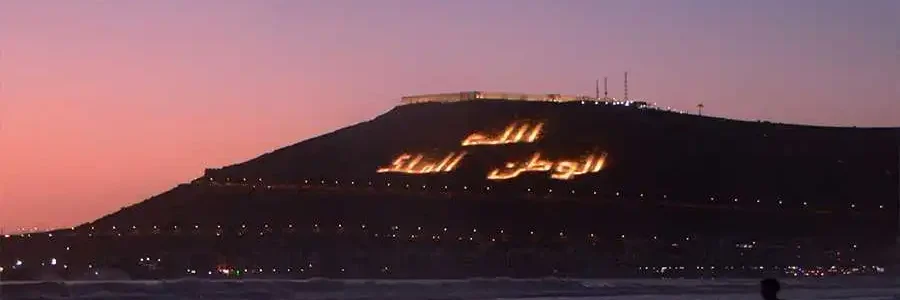
"If Destiny Destroyed Agadir, Its Reconstruction Is Up To Our Faith and Will."
In the immediate aftermath, Morocco’s King Mohammed V flew to the city and declared his powerful and hopeful vision for the future. “If destiny destroyed Agadir, its reconstruction is up to our faith and will.” This statement became the motto for a monumental rebuilding project that would transform Agadir.
The decision was made not to rebuild on the old, devastated site, which was deemed too vulnerable, but to construct a new city just south of the old one. The rebuilding was a monumental undertaking, guided by a royal decree and shaped by new, stringent anti-seismic building codes. Architects and urban planners from around the world were brought in to design a city that was not only modern and beautiful but also resilient.
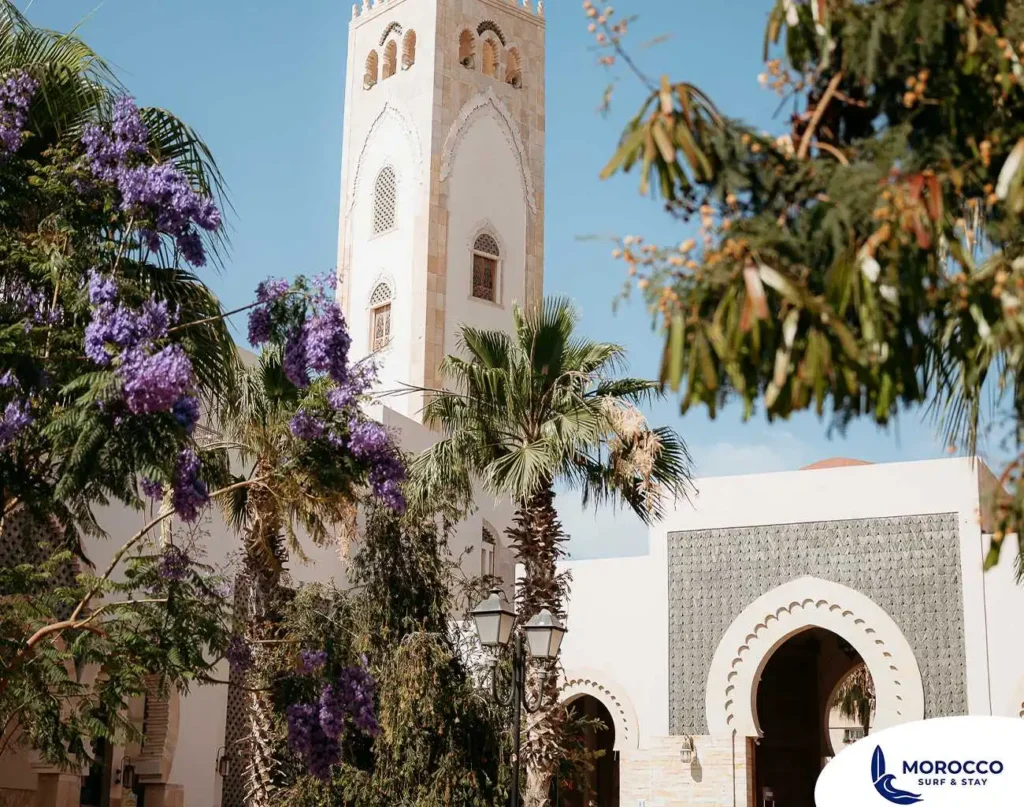
The new Agadir was built with wide, spacious boulevards, low-rise buildings, and a clear, logical street plan—a stark departure from the traditional medina layout. The architecture of the new city reflects a blend of modernist and brutalist styles, with an emphasis on strong, reinforced concrete structures designed to withstand future tremors. While some criticize the lack of traditional Moroccan architecture, the city’s design is a testament to its singular focus on safety and modernity.
Agadir Today: A City Reborn
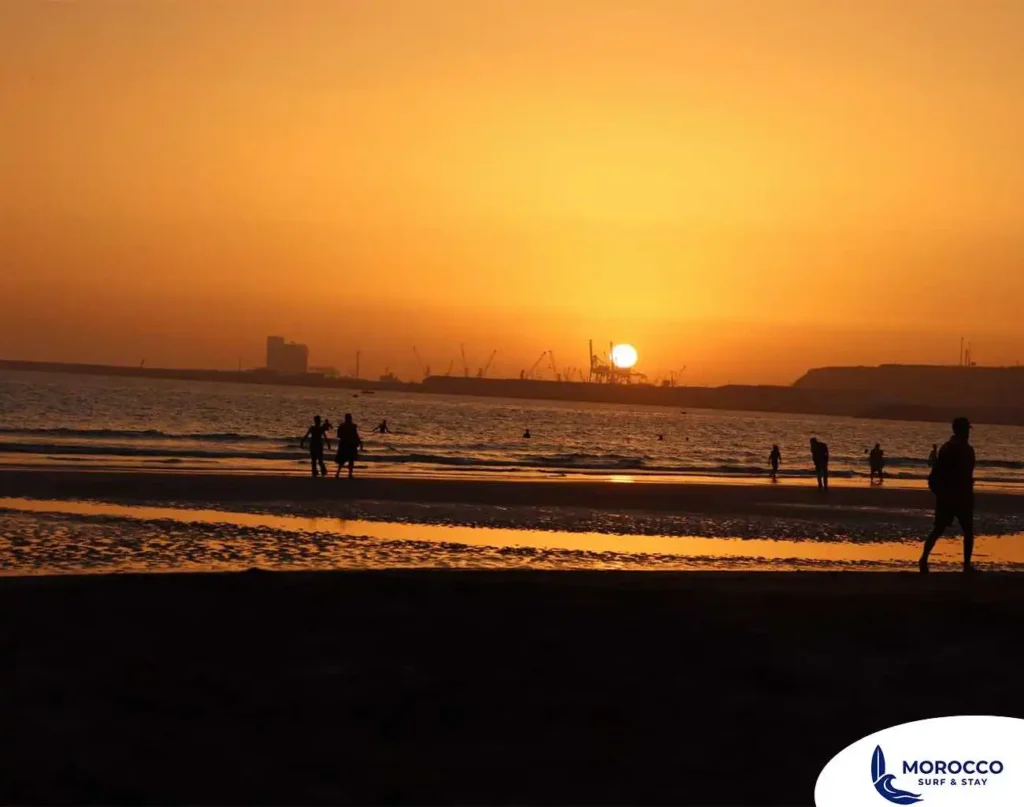
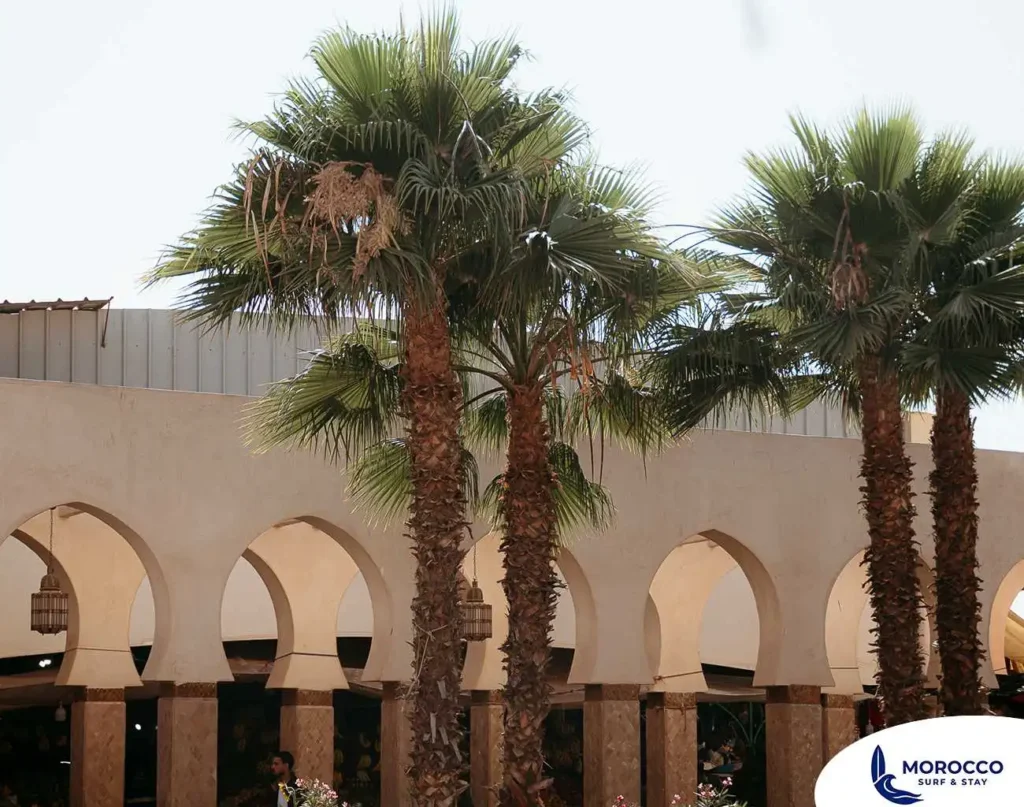
The result of this grand rebuilding project is the Agadir you see today. It is a city defined by its wide, palm-lined avenues, its meticulously planned green spaces, and a magnificent 10-kilometer crescent beach that is its main draw. The city’s focus on tourism and fishing has made it a key economic hub for the region.
While the new Agadir is a symbol of forward-looking modernity, the scars of the earthquake are not forgotten.
The Old Kasbah:
A top a hill overlooking the bay, the remnants of the Kasbah still stand, a haunting reminder of the past. The original entrance with the inscription “Fear God and Honor the King” is still visible. Visitors can take a cable car up the hill to see the panoramic view of the new city and reflect on the history beneath their feet.
The Memorial Garden:
The city has a memorial garden, the “Jardin du Souvenir,” dedicated to the victims of the earthquake. It’s a peaceful place for reflection and a poignant tribute to the city’s resilience.
The city has a memorial garden, the “Jardin du Souvenir,” dedicated to the victims of the earthquake. It’s a peaceful place for reflection and a poignant tribute to the city’s resilience.
Bottom Line:
Agadir’s story is unique in Morocco. It’s a city that was almost completely erased and then meticulously reborn from the rubble. It is a place that celebrates its modern identity, while never forgetting the tragedy that shaped it. A visit to Agadir is not just a beach vacation; it’s an opportunity to experience a powerful story of loss, resilience, and a community that chose to look to the future with faith and will.
Frequently Asked Questions (FAQ):
1. What was the exact date and magnitude of the earthquake that destroyed Agadir?
The catastrophic earthquake that leveled most of Agadir occurred just before midnight on February 29, 1960. The seismic event was a shallow tremor, registered with a magnitude between 5.8 and 5.9 on the Richter scale. While this magnitude is not considered extremely large by global seismic standards, its shallowness and the proximity to densely populated areas caused an immense concentration of energy and destruction, leading to the collapse of nearly 90% of the city in a mere 15 seconds and resulting in a tragic loss of life, estimated between 12,000 and 15,000 people.
2. Why was the decision made to build a new city instead of rebuilding on the original site?
The decision to construct a new city just south of the old location was a direct and cautious response to the devastating destruction caused by the earthquake. The original site was deemed highly vulnerable to future seismic activity, making it unsafe for large-scale reconstruction. Following King Mohammed V’s powerful decree to rebuild, the urban planning was guided by stringent anti-seismic building codes, which necessitated a fresh start on a more stable and safe foundation. This approach allowed architects and planners to design a modern, resilient metropolis with wide, spacious boulevards and reinforced concrete structures, prioritizing safety and future-proofing over traditional urban layouts.
3. How does the modern architecture of Agadir differ from other historic Moroccan cities like Marrakech or Fez?
Agadir’s architecture is a stark departure from the traditional, intricate designs seen in the ancient medinas of Marrakech or Fez, which feature winding alleyways and historical stucco buildings. Because the new Agadir was meticulously rebuilt after the 1960 earthquake, its design emphasizes modernist and brutalist styles characterized by low-rise buildings, clear and logical street plans, and extensive use of strong, reinforced concrete. This choice was deliberate, driven by the need for earthquake resilience. While some criticize the lack of traditional Moroccan ornamentation, the clean lines and spaciousness reflect its identity as a forward-looking, planned city focused on safety, tourism, and a modern way of life.
4. What were the lasting human consequences of the earthquake, beyond the physical destruction?
The human consequences of the 1960 Agadir earthquake were profound and lasting, extending far beyond the immediate physical destruction and tragic loss of life. An estimated 12,000 to 15,000 people—nearly a third of the city’s population—perished, creating an instantaneous, overwhelming void in the community. The survivors were left to navigate a landscape of devastation, facing a complete loss of their homes, livelihoods, and communal structures, which were compounded by the disaster striking during the holy month of Ramadan. The event necessitated a complete uprooting and reshaping of the community’s identity, forcing them to collectively embrace King Mohammed V’s vision to rebuild a new city from scratch, making resilience and modernity central to their future identity.
5. Where can visitors go today to reflect on the history of the 1960 earthquake?
Visitors have two primary sites for reflection on the earthquake’s history. The first is the Old Kasbah (Agadir Oufella), perched on the hill overlooking the bay; its ruins are a haunting, visible reminder of the past city, allowing visitors to see the ancient walls that crumbled and reflect on the panoramic view of the modern metropolis that rose from the tragedy. The second significant location is the Jardin du Souvenir (Memorial Garden) located within the new city. This is a peaceful, dedicated space for quiet reflection, serving as a poignant, green-space tribute to the thousands of victims who lost their lives in the catastrophe.